How to Become More Productive and Motivated
For a while, my days looked exactly the way they were supposed to. I tracked my habits, hit my streaks, got things done at work. On paper, I was doing everything right.
And somewhere inside that routine, I quietly stopped feeling like myself.
The thing that eventually pulled me out of it had nothing to do with another productivity system. It was a 31-day challenge built around one simple idea: figuring out who I actually was before trying to fix how I spent my days.
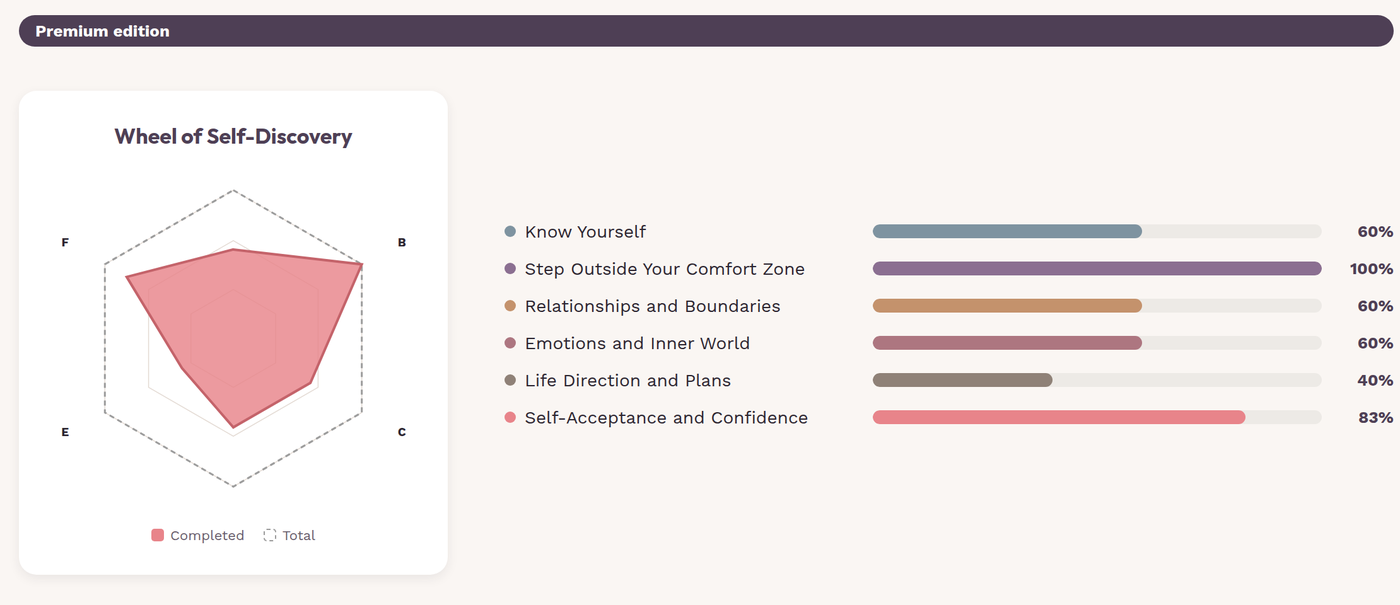
When Productivity Stopped Feeling Like Enough
I had a productive habit tracker running every single day, streaks and all, and I was efficient and productive by any measure I could point to. I still finished most evenings feeling like a stranger to my own life.
Nothing was wrong, exactly. Everything just felt like a loop I was running on autopilot, with no idea why I'd started running it in the first place.
Morning Motivation Tips That Stopped Working
I went back to the usual morning motivation tips, the same ones that had worked before: an earlier alarm, a better playlist, a tighter routine.
None of it landed this time. I wasn't short on information about how to get motivated in the morning. The problem wasn't the morning. It was that I couldn't remember what I was motivated for.
Realizing I Had Forgotten Who I Actually Was
That's the part that was hard to admit. Somewhere between work, habits, and just keeping up, I'd lost track of the person underneath all of it, the things I actually liked, the version of me that existed before productivity became the whole plan.
I didn't need another system. I needed to go back and actually look.
How I Started to Find Myself Again Through Old Habits and Interests
So that's what the 31 days became: a slow walk back through old habits and interests I'd quietly dropped without noticing. The same self-discovery challenge asked one honest question a day, and most of them had nothing to do with productivity at all.
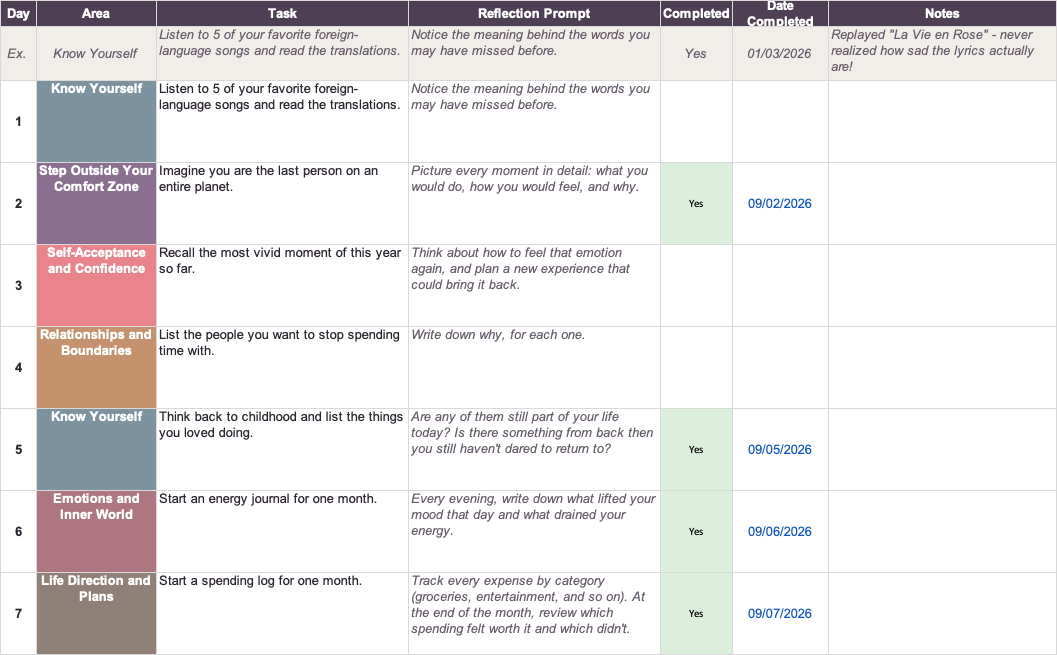
I wrote down hobbies I used to love and never explained to myself why I'd stopped. I remembered the version of a weekend I actually wanted, not the one I defaulted to. A few of the questions were uncomfortable in a useful way.
Around the same time, I also got curious about how to build habit forming products of my own, built on the same simple idea that had worked for me: track honestly, and the pattern tells you the truth eventually. That curiosity turned into a small project I still work on today.
How to Start a Morning Routine That Actually Sticks
Once I had something worth getting up for again, building a real morning routine stopped being a discipline problem. Here's roughly what it looked like once it stopped feeling forced:
- I woke up at the same time, even on weekends, instead of negotiating with myself
- I picked one thing that was actually mine before checking my phone
- I kept it under fifteen minutes so skipping it felt pointless
- I tied it to something I already looked forward to, like coffee
- I let it flex on hard days instead of treating one missed morning as failure
Habits and Productivity Finally Started to Connect
For a long time, habits and productivity felt like two separate projects running at once. Once I actually knew what I wanted my days to add up to, one started feeding the other instead of competing with it.
10 Good Work Habits I Actually Kept
Not everything I tried stuck, and that's fine. These are the productive work habits that survived contact with a real, busy week:
- Starting the day with the one task I was most likely to avoid
- Closing my laptop at a set time instead of "just finishing one more thing"
- Writing tomorrow's first task down before ending today
- Batching email and messages into two short windows instead of all day
- Taking a real break away from my screen, not just switching tabs
- Saying no to meetings that could have been a message
- Reviewing my week every Friday instead of just moving on
- Keeping one list, not five half-finished ones
- Protecting my first productive hour from anything that wasn't the priority
- Tracking the habit itself, so I could see the pattern instead of guessing
What Productivity Actually Means (Once I Looked It Up)
At some point in all this reading, I went past the self-help version of the word and landed on the textbook definition of productivity: a measurement of output relative to the inputs used to produce it. Economists apply that same definition to companies, to countries, and to individuals, even though for one person it usually comes down to personal goals and time management more than economic performance. Some sources spell it labour productivity instead of labor productivity, but the idea stays the same: production and output per worker, measured against what went in to get there.
Labor Productivity and Multifactor Productivity Are Not the Same Thing
I hadn't realized productivity split into different types until I started reading about it properly.
- Labor productivity measures output per hour worked, using hours worked and labor hours as the main measured inputs
- Multifactor productivity looks at combined inputs instead of labor alone, which gives a fuller picture of what actually produced the result
Reports that track a labor productivity index or run a full productivity analysis over time are watching productivity changes and productivity levels shift, not judging a single day.
How Measuring Productivity Actually Works
In practice, measuring productivity comes down to a simple ratio of output to inputs: units of output divided by units of input, often expressed as an input index or an index of hours worked.
At the level of economic performance, that might mean output per hour across an entire industry, tracked through productivity indexes and management practices. At a personal level, it is closer to how much I actually finished relative to the hours and energy I put in, something technological advances can shift a lot faster than willpower ever did.
What Actually Moves the Numbers
Factors affecting productivity turned out to be less mysterious than I expected. The ones that kept showing up, in everything from labor productivity figures to what organizations like the Chartered Management Institute talk about, were:
- Work culture, probably more than any single habit I tried on its own
- Stress levels, which quietly drag output down long before burnout becomes obvious
- Quality factor, meaning finished work that does not need redoing later
- Technological advances, which can change what is even possible in a day
Agencies that publish labor productivity figures usually report them as a percent change or average annual percent changes rather than one fixed number, because output moves constantly, not in a straight line.
None of that changed my life by itself. But it reframed what I was actually trying to do: not produce more hours, but get more honest output out of the hours and the version of myself I already had.
What I Learned From Watching How Other People Stay Productive
I also started paying attention to the habits of successful real estate agents, the kind of people whose entire income depends on productivity and time management with no boss setting their schedule. What stood out wasn't talent. It was a handful of practical ways to sharpen the saw in daily life, small resets built into otherwise packed days, that kept their habits and productivity from running on empty.
It was the same lesson from a different angle: the system only works once you know what it's actually for.
How to Be More Productive in Life, Not Just at Work
Figuring out how to be more productive in life, not only during work hours, meant admitting that the hobbies and people I'd been putting off weren't wasted time. They were most of the point.
Most advice about how to be productive assumes you already know why you're doing the work. I didn't, not really, until I went looking for the person who used to.
If you're asking how to increase productivity in life as a whole, the honest answer is that it rarely comes from doing more. It comes from remembering what's actually worth doing it for.
Focused, Motivated, and Finally Like Myself Again
These days I wake up focused and motivated more often than not, not because I found a better system, but because I'm no longer running one for a version of myself I didn't recognize.
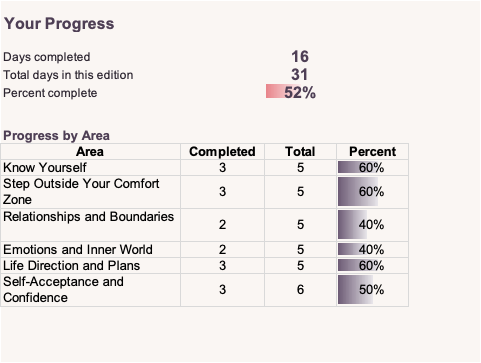
I still come back to that same 31-day challenge every few months, mostly to check in with myself honestly - it's a real spreadsheet that updates its own dashboard as I go, not just a list of questions to stare at. It's less about productivity now and more about staying someone I actually want to spend my days as.
FAQ
How do you get motivation?
Most of the time, it comes from clarity more than hype. Once you know specifically why a task matters to you, showing up tends to require a lot less convincing.
How do I get motivated?
Start smaller than feels necessary, and be honest with yourself about what you actually want first. Motivation tends to follow a clear reason more than it follows a clever trick.
What's a good productive work habits definition?
In practice, they're the small, repeatable choices that protect your time and attention, things like batching tasks, protecting your first productive hour, and reviewing your week, rather than any one dramatic change.
What's the best productivity tip for a fast-paced work environment in 2026?
Protect one uninterrupted block of time before the day gets reactive. In a fast-paced environment, that single block often produces more than the rest of the day combined.